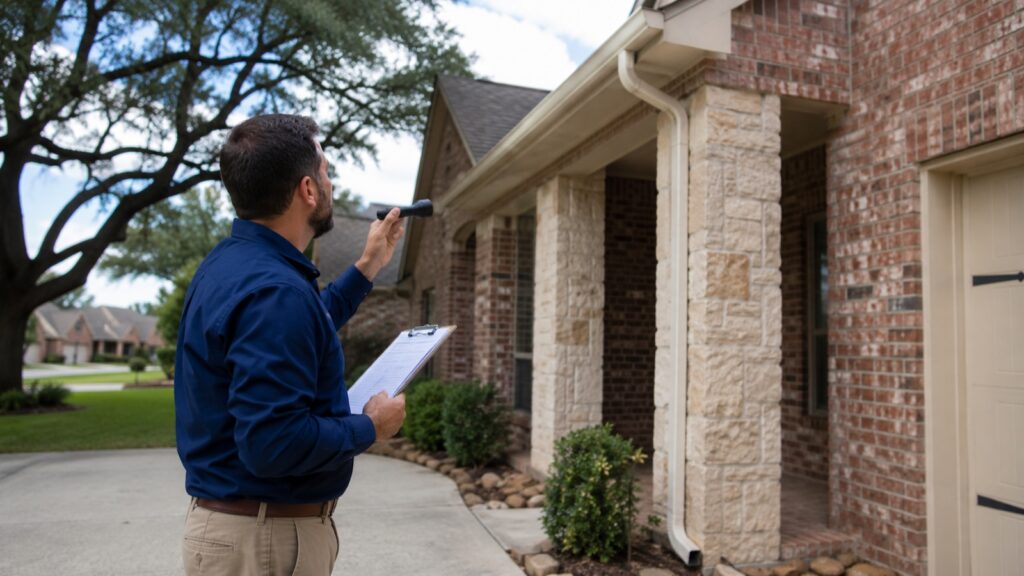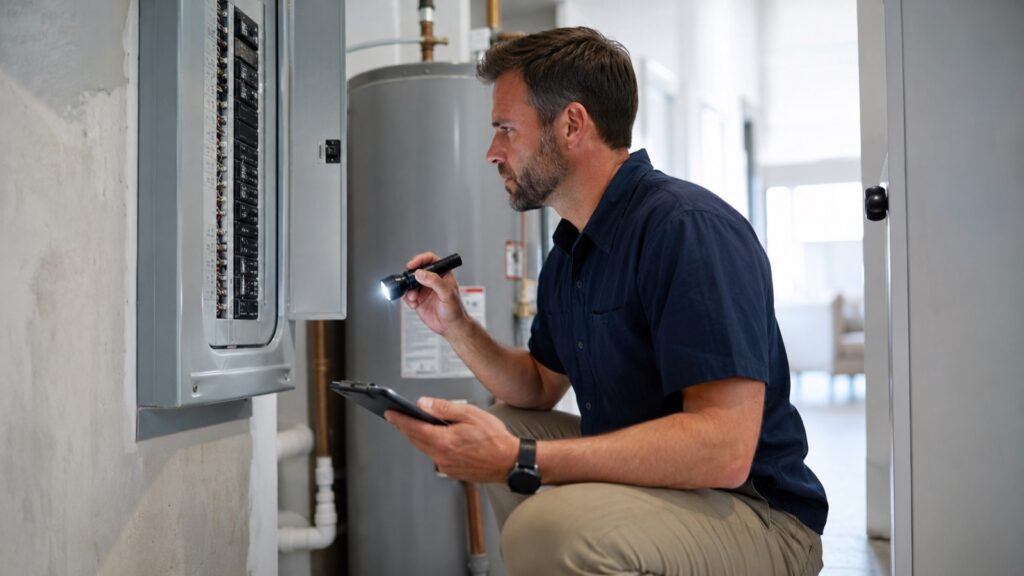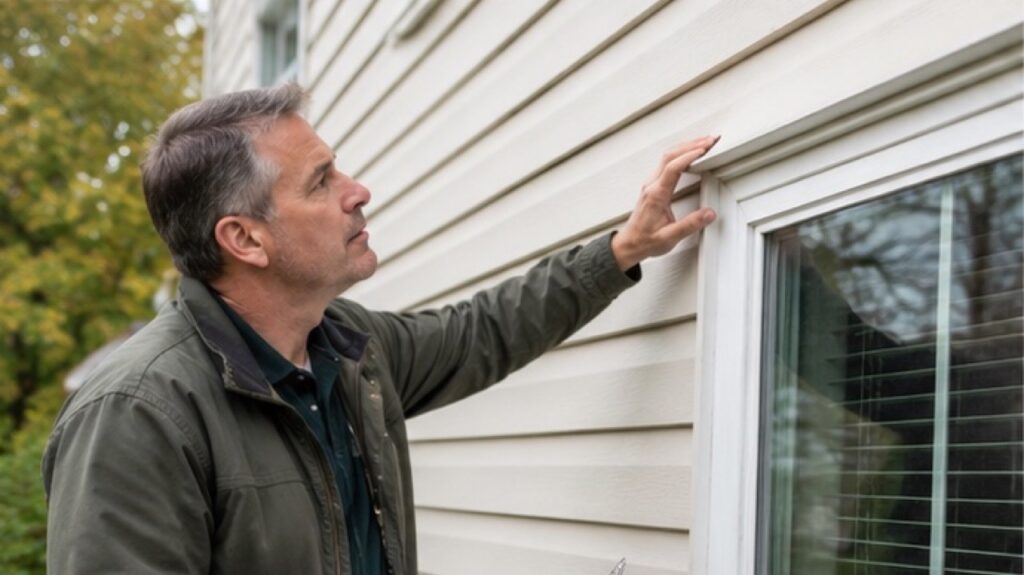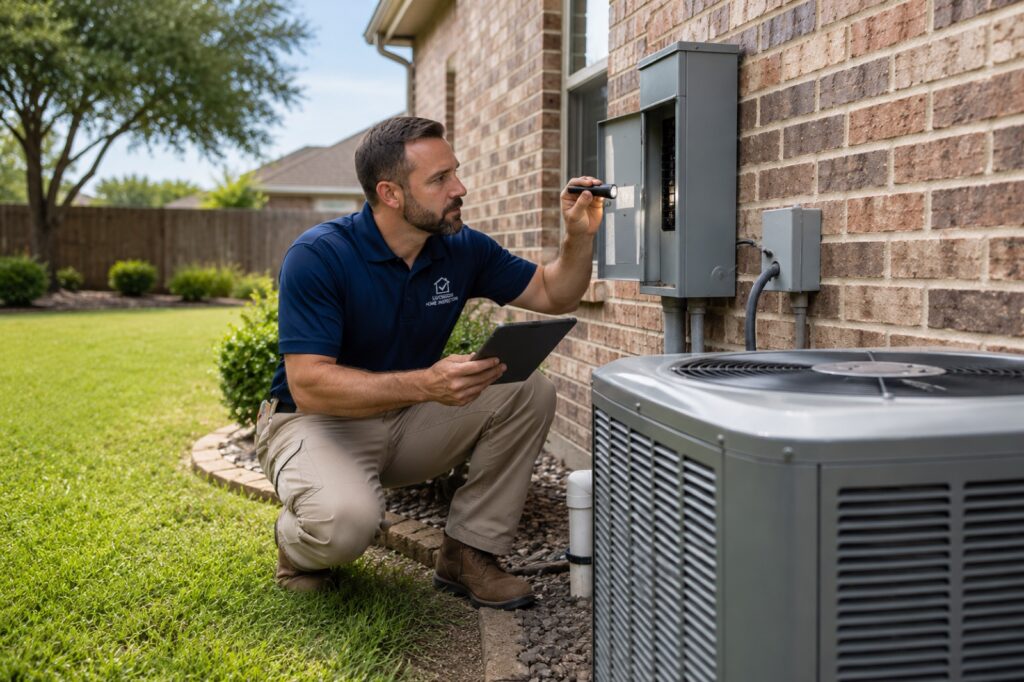
A Texas home inspection is a visual, non-invasive review of the home's readily accessible systems, performed to the TREC Standards of Practice. That means the roof and attic, foundation and structure, electrical, plumbing, HVAC, and the interior and exterior. Here is what each part covers, and what is deliberately left out.
What does a home inspection cover?
A standard home inspection is a visual, non-invasive evaluation of the home's readily accessible systems and components, performed to the TREC Standards of Practice. That typically includes:
- Roof and attic - covering, flashing, gutters, ventilation, and insulation.
- Foundation and structure - signs of movement, cracks, and drainage around the home.
- Electrical - the panel, wiring, outlets, and safety devices.
- Plumbing - supply lines, drains, fixtures, and the water heater.
- HVAC - heating and cooling equipment, ductwork, and overall performance.
- Interior and exterior - walls, ceilings, floors, windows, doors, siding, and grading.
What is not included in a home inspection?
A general inspection is not a code inspection, an appraisal, or a warranty against future failure. Sewer lines, pools and termite (WDI) activity are separate add-on services. On an older home, or one with a pool or mature trees, those add-ons are usually worth buying.
A general inspection is not a code inspection, an appraisal, or a guarantee against future failure. Some areas, like sewer lines, pools, or termite activity, are evaluated through specialized add-on services. If a home has a pool, mature trees, or is older, those add-ons are often worth it.
What should a Dallas-Fort Worth inspection focus on?
Three North Texas conditions drive most local findings: expansive clay soil that moves foundations, extreme summer heat that strains HVAC systems, and spring hail that shortens roof life. A local inspector knows how each of those shows up over time.
North Texas brings its own challenges: expansive clay soils that drive foundation movement, intense summer heat that strains HVAC systems, and hail that wears on roofs. A local inspector knows what to look for and how these conditions show up over time.
Why does the inspection matter before you close?
A thorough inspection gives you a clear picture of the home's condition so you can negotiate, budget, or walk away with confidence.