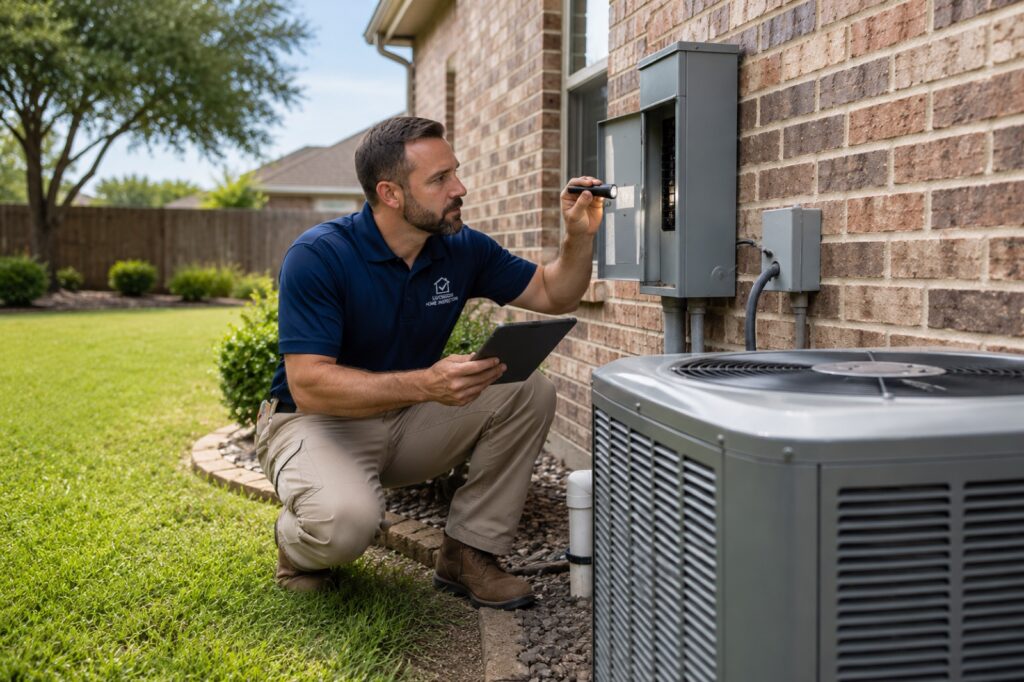
Not all home inspections are created equal. A rushed walk-through with a clipboard is very different from a careful, standards-compliant inspection that methodically works through every major system of the house. Knowing what a thorough inspection actually looks like helps you recognize quality when you see it, and notice when something is being skipped.
It follows a defined scope
A thorough inspection is not improvised. It follows a Standards of Practice, the written rulebook that defines which systems get examined. The major national associations, InterNACHI and ASHI, each publish one, and in Texas, the Texas Real Estate Commission (TREC) publishes its own Standards of Practice along with a promulgated, standardized report form that licensed inspectors must use. That shared structure is why a careful inspection covers the same core ground from one house to the next.
What gets examined, start to finish
Working through the home systematically, a good inspector examines the major visible and accessible components:
- Roof
- Structure and foundation
- Exterior
- Attic, insulation, and ventilation
- HVAC (heating and cooling)
- Electrical system
- Plumbing system
- Interior
- Built-in appliances
Remember that this work is visual and non-invasive. The inspector looks at what can be seen and safely reached; they do not open up walls or dig up the yard. A thorough inspector makes the most of that access, getting on the roof or into the attic where it is safe to do so, rather than glancing from the ground.
The time it takes
Thoroughness takes time. A careful inspection of an average home is not a fifteen-minute affair; it is a deliberate, room-by-room and system-by-system process. The right mindset is patience: an inspector who is moving slowly and methodically is doing the job properly, not wasting your money.
The quality of a good report
The inspection is only half the value. The other half is the report. A strong report is more than a pass-fail checklist. It explains each finding in plain language, shows photos of the actual conditions, distinguishes minor maintenance items from significant concerns, and gives clear next steps. In Texas, the TREC promulgated form gives reports a consistent backbone, which makes them easier to read and compare. To get the most out of yours, see our guide on how to read your inspection report.
Honest about its limits
A thorough inspection is also honest about what it cannot do. Because it is visual and non-invasive, it will not uncover every hidden or future problem, and a good inspector says so rather than overpromising. Understanding this is part of setting fair expectations; you can read more about how accurate home inspections are and where their natural boundaries lie.
What it adds up to
A thorough inspection combines a defined scope, patient hands-on work across every major system, and a clear, photo-supported report, all delivered by a licensed professional who is upfront about the limits. That is the standard worth holding out for.