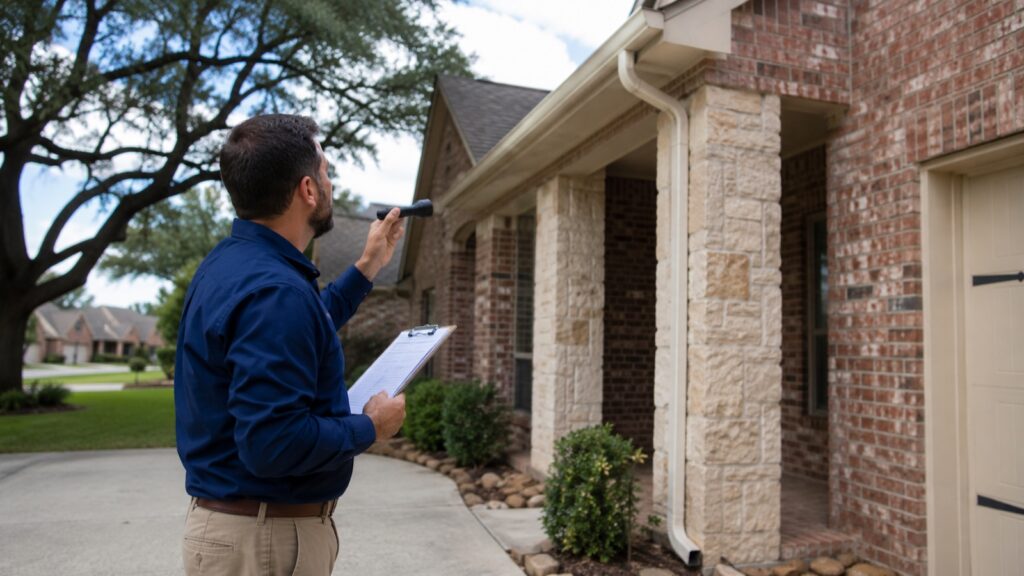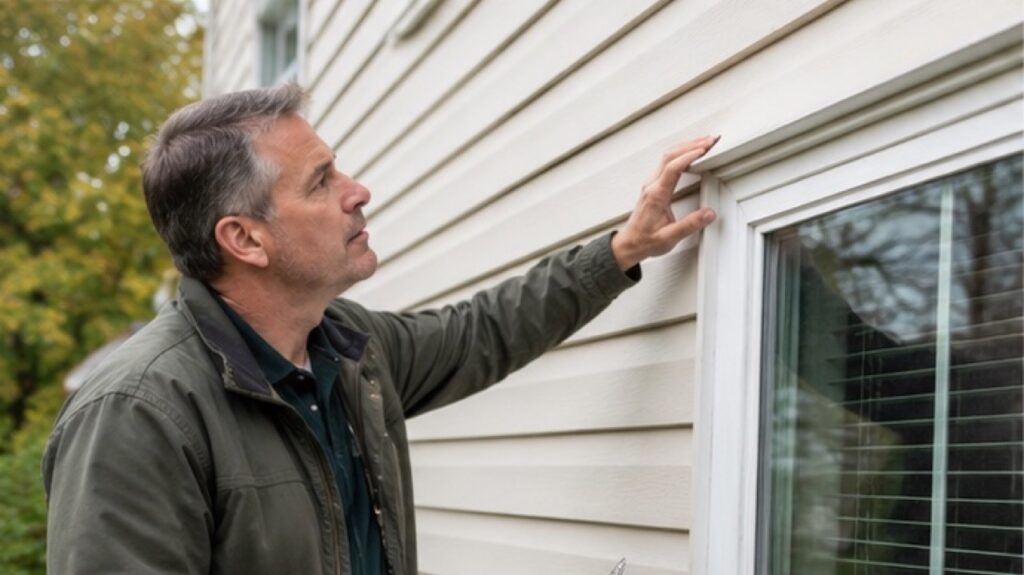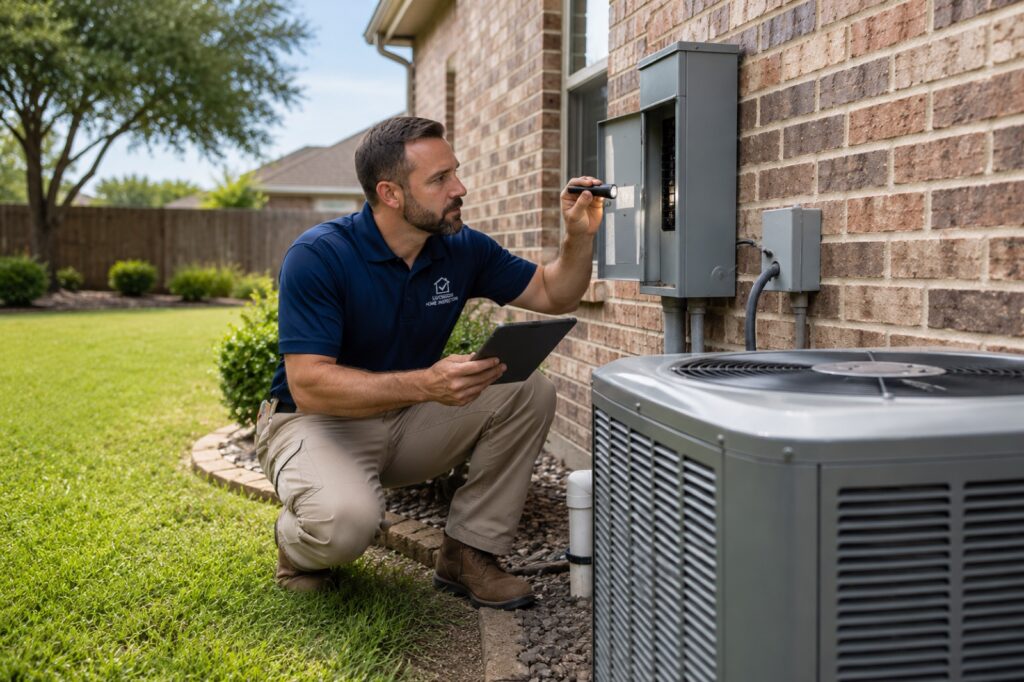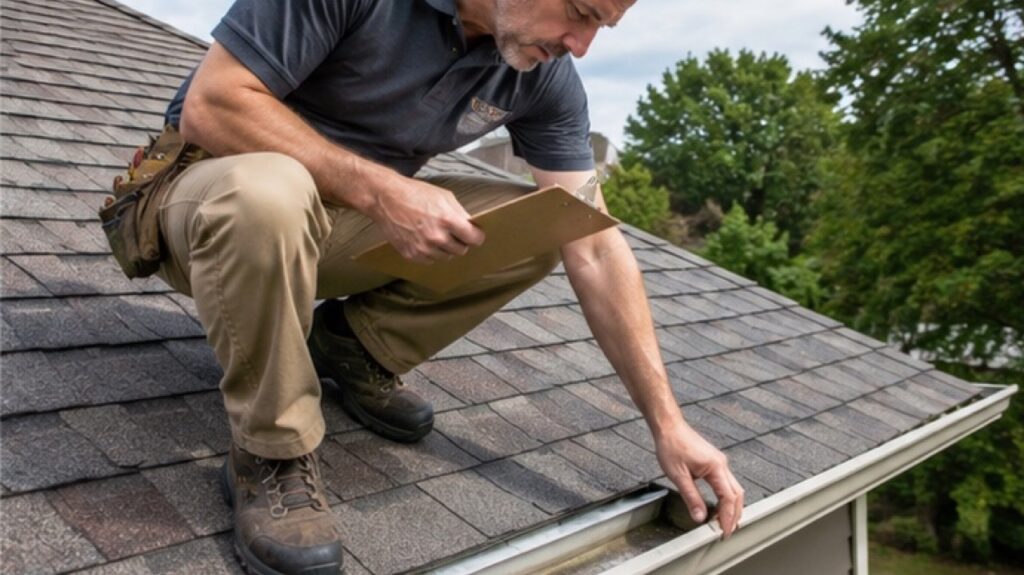
A 4-point inspection and a wind mitigation inspection are narrow, insurance-driven checkups, not the broad buyer inspection most North Texas homeowners picture. A 4-point looks at four systems an insurer cares about most on an older home: the roof, electrical, plumbing, and HVAC. A wind or hail roof certification documents the roof's condition and storm resistance. Both exist to help a carrier decide whether to write or renew a policy, and both are far more limited than a full home inspection.
What a 4-point inspection actually covers
When a home in Dallas-Fort Worth reaches a certain age, often around 25 to 40 years depending on the carrier, an insurer may ask for a 4-point inspection before issuing or renewing a homeowners policy. The "4" refers to the four systems most likely to cause a claim if they are aging or outdated:
- Roof: material, approximate age, visible condition, and how much service life appears to remain.
- Electrical: panel type, wiring type, and obvious hazards. This is where older-home issues like aluminum branch-circuit wiring or a problem panel such as a Federal Pacific or Zinsco panel can affect insurability.
- Plumbing: the visible supply and drain materials and any active leaks. Carriers often ask specifically about polybutylene supply lines, since some insurers may decline, non-renew, or ask for a re-pipe. That varies by carrier and is not a universal rule.
- HVAC: the heating and cooling equipment, its approximate age, and whether it appears functional.
That is the whole scope. A 4-point ignores the foundation, the windows, the attic, the appliances, drainage, and dozens of other things a buyer inspection examines. It answers one question for the insurer: are these four systems in reasonable shape, or do they pose an outsized claim risk?
Wind and hail roof certifications
North Texas sits in one of the most active hail and wind corridors in the country. Spring storms routinely drop large hail and straight-line winds across the Metroplex, and roofs take the brunt of it. A wind mitigation or roof certification inspection documents the roof so a carrier can price wind and hail coverage, or in some cases decide whether to keep covering the roof at all.
This kind of report typically records the roof covering, its age, the visible condition, signs of prior storm damage or repair, and how the roof is built and attached. The goal is to give the insurer a clear, dated picture of storm resistance and remaining life. If you want to understand how hail and heat wear down Metroplex roofs in the first place, our guide to roof hail and heat damage in North Texas walks through what actually fails and why.
How these differ from a full buyer inspection
The biggest source of confusion is purpose. A buyer's inspection is for you, the person deciding whether to purchase or how to negotiate. An insurance inspection is for the carrier, deciding whether to take on the risk. Those are different jobs, and they produce different reports.
A standard Texas real estate inspection follows the TREC Standards of Practice. It is visual, non-invasive, and a snapshot of one point in time. The inspector reports the visible, accessible condition of the home's systems but does not determine code compliance, does not estimate exact remaining service life, and does not open walls or evaluate concealed or buried components. To see the full breadth of what that involves, read what a home inspection covers in DFW.
By contrast, a 4-point or wind certification is intentionally narrow. It looks at fewer systems, through an insurer's lens, and often answers a specific underwriting checklist. It is not a substitute for a buyer inspection, and a buyer inspection is not a substitute for it. They overlap on roof, electrical, and plumbing, but the scope, the audience, and the conclusions are different. If you are weighing which type fits your situation, our overview of the different types of home inspections lays out the options side by side.
Do you need one in North Texas?
For most newer homes, no. Insurers generally request a 4-point only on older housing stock, and they request a roof certification when a roof is aging, has prior storm history, or is being newly insured. If your carrier asks for one, the request usually spells out exactly what they want documented, so you are not guessing at scope.
The practical move is to keep your buyer inspection and any insurance inspection as separate, purpose-built reports rather than expecting one to do both.
One last honest note: neither a 4-point nor a wind certification guarantees a policy or a premium. They give the carrier information. The underwriting decision is theirs, and it can vary widely from one insurer to the next.