Good drainage means water moves away from your home instead of sitting against it. On the expansive clay soil under most of Dallas-Fort Worth, that simple idea protects one of the most expensive things you own: your foundation. The ground around a North Texas home should slope away from the slab, gutters should carry roof water well past the foundation, and water should never pool against the brick. Here is how grading and drainage work on clay, why steady moisture matters so much here, and what a home inspector actually looks at on the outside.
Why drainage is a clay-soil problem first
North Texas sits on expansive clay that swells when it gets wet and shrinks when it dries out. That single trait drives most of the foundation trouble in the region. When water pools against one side of the slab, the soil there stays swollen while the dry side keeps shrinking. The uneven push and pull is what stresses a foundation over time and contributes to the foundation movement so common in DFW homes.
The goal is not to keep the soil bone dry or soaking wet. It is to keep moisture consistent all the way around the home. Drainage and grading handle one half of that equation by shedding excess water, while seasonal foundation watering handles the other half by adding moisture during long dry stretches. They work together. Good grading without watering still lets the clay dry and shrink in summer, and watering without good drainage can leave water pooling where you do not want it.
Positive slope: the foundation of good drainage
The ground should fall away from the foundation on every side. A common rule of thumb is roughly six inches of drop over the first ten feet, which gives surface water a clear path away from the slab. This is called positive grade, or positive slope.
Problems show up when the grade is flat or, worse, tilts back toward the house. That is negative grading, and it funnels rain straight to the foundation. In North Texas you will often see it where a flower bed has been built up against the brick, where soil has settled next to the slab, or where a patio or driveway slants the wrong way. Mulch and soil piled above the slab line also trap moisture against the foundation and can hide other issues.
Gutters and downspout extensions
A roof sheds an enormous amount of water during a single North Texas thunderstorm, and all of it lands in a narrow band right next to the house. Gutters collect that water, but they only help if the downspouts carry it far enough away. A downspout that dumps right at the corner of the slab is almost as bad as no gutter at all.
- Add downspout extensions or splash blocks so water discharges several feet from the foundation, ideally onto ground that slopes away.
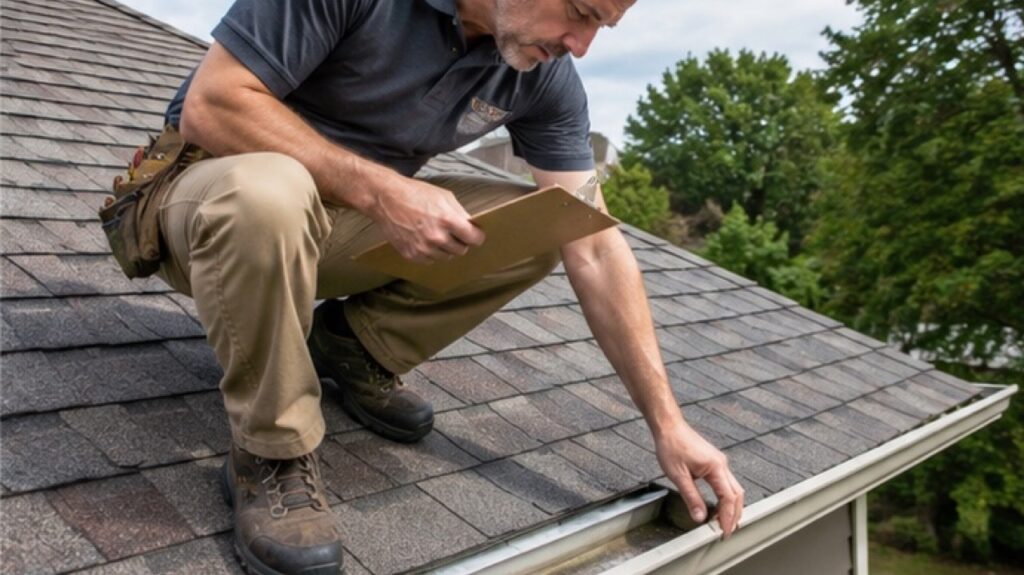
- Keep gutters clear so they do not overflow and pour water down the wall.
- Make sure underground drain lines from downspouts actually daylight somewhere, rather than backing up against the slab.
Pooling, French drains, and other fixes
If you have a low spot in the yard that holds water after a storm, or a stubborn negative-grade area you cannot regrade easily, a French drain is one common solution. It is a gravel-filled trench with a perforated pipe that collects standing water and routes it away from the home to a lower discharge point. Other fixes include simple regrading to restore positive slope, surface swales that channel runoff, and correcting the slope of patios or walkways. The right answer depends on your lot, so it is worth having a foundation or drainage professional weigh in before you dig.
Whatever the method, the aim is the same. You want surface water moving steadily away from the slab so the clay around the entire perimeter stays at a similar moisture level through both the wet spring and the dry, cracked heat of a DFW August.
What the inspector observes at the exterior
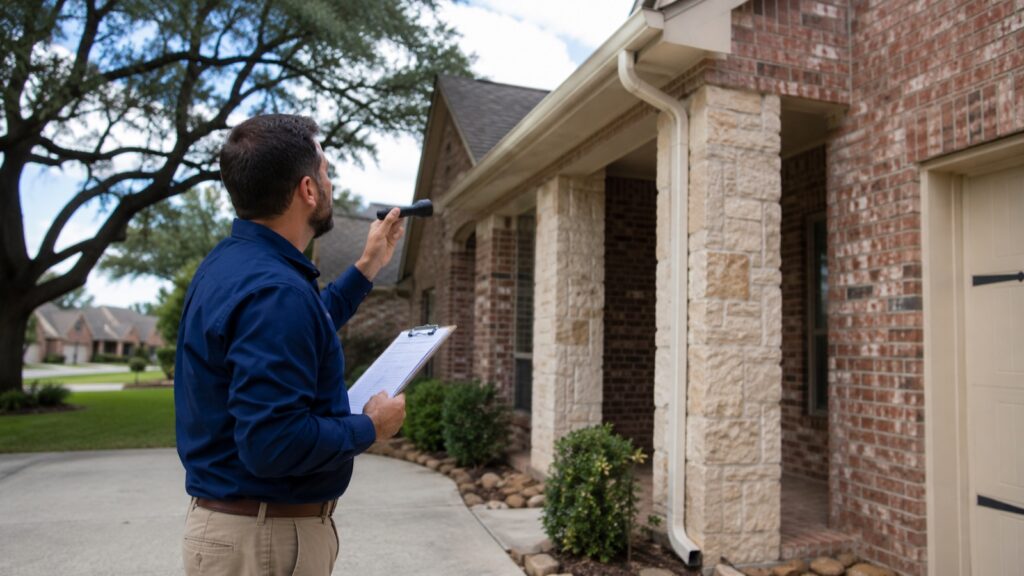
A Texas home inspection follows the TREC Standards of Practice, and that shapes what an inspector can tell you about drainage. The inspection is visual, non-invasive, and a snapshot of conditions on the day of the visit. At the exterior, the inspector reports what is visibly observable, such as:
- Grading that appears to slope toward the foundation rather than away from it.
- Evidence of standing water, pooling, or erosion near the slab.
- Gutters and downspouts that are missing, damaged, or discharging right at the foundation.
- Soil or landscaping built up above the slab line against the brick.
There are real limits, though, and an honest report says so. A standard inspection is not a code-compliance review, and the inspector does not excavate or test buried, hidden, or concealed systems. Sub-surface and sub-slab drainage, including underground downspout lines and French drains, are concealed and fall outside the standard scope. An inspector also will not predict how the soil will behave next season or guarantee a foundation will stay level. They report the visible conditions and note where water is being directed in a way that could affect the home. For more on where these lines are drawn, see what a TREC inspection covers.