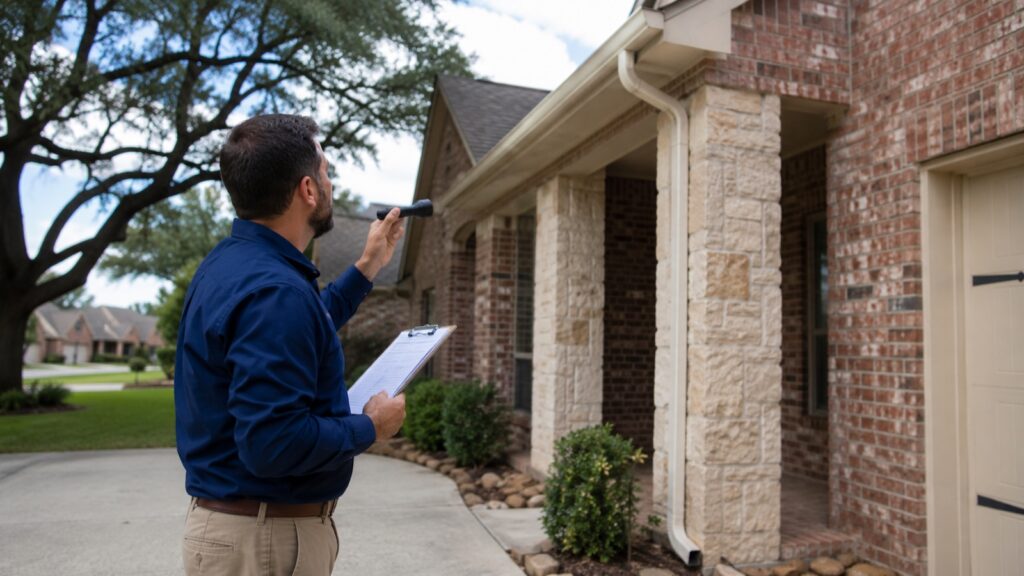
If you are nervous about what a home inspection will turn up on a Dallas-Fort Worth house, here is the reassuring truth: almost every report comes back with a long list of findings, and most of them are minor, expected, or simple to fix. A standard Texas inspection is a visual, point-in-time snapshot of what the inspector can see and reach, so a thick report usually means the inspector was thorough, not that the home is failing. The real skill is sorting the routine items from the few that deserve your attention.
Foundation and clay soil movement
North Texas sits on expansive clay that swells when wet and shrinks in drought, so foundation findings are among the most common in the region. Inspectors regularly note hairline cracks, sticking doors, or minor slab elevation differences. Under the TREC standards, the inspector reports visible and present indications of adverse performance, but this is a performance opinion, not an engineering analysis of the cause or a repair design. If the notes raise real concern, the next step is a licensed structural engineer. Many homes here, especially newer builds, use post-tension slab foundations that are designed to flex with the soil, and a little movement does not automatically mean trouble. Our guide to foundation movement in North Texas walks through what is normal and what is not.
Roof wear from hail and heat
Between blistering summers and spring hailstorms, DFW is hard on roofs. Inspectors frequently flag granule loss, lifted or cracked shingles, exposed fasteners, and worn flashing. Heat alone ages asphalt shingles faster here than in milder climates, and hail can bruise a roof without an obvious leak. The inspector reports the visible condition of roofing materials but does not determine remaining service life or guarantee the roof will not leak in the future. If hail is in the picture, hail and heat wear tends to play out in predictable ways across our climate.
Drainage and grading
Because so many foundation problems start with water, inspectors pay close attention to how the ground sheds it. Common findings include soil sloping toward the house, downspouts that dump right at the slab, and low spots that pond after rain. These are often inexpensive to correct, and addressing them early helps protect the foundation in our shrink-swell clay. Keep in mind that buried or sub-slab drainage systems are concealed and fall outside the standard inspection scope.
HVAC age and condition
Air conditioning earns its keep in Texas, and an aging system is one of the most frequent big-ticket findings. An inspector observes whether the unit operates and notes visible deficiencies, but the standards do not require determining the age or remaining life of any component. A serial number can hint at age, yet that is informational, not a verdict. If the system is original to an older home, plan for it the way you would any major appliance near the end of its run.
Minor electrical findings
Small electrical items show up on nearly every report. Two of the most common are missing GFCI protection near water and double-tapped breakers, where two wires share a single breaker that was meant for one. These are usually quick corrections for a licensed electrician. Note that the inspector reports such deficiencies but is not required to operate breakers or verify the effectiveness of overcurrent devices. Our explainer on GFCI and AFCI protection covers why these come up so often.
Plumbing drips and water heaters
Slow drips under sinks, a running toilet, or worn supply valves are routine plumbing findings and typically easy fixes. Water heaters often draw notes too, whether for age, a missing or improperly routed temperature-pressure relief discharge line, or corrosion at the fittings. The inspector reports the visible material and condition of supply and drain lines but does not test concealed lines or determine how long they will last. Invasive checks like a hydrostatic test are not part of a standard inspection and may only be performed by a licensed plumber with separate written seller authorization.
Attic insulation and ventilation
In our climate, attic insulation gaps and weak ventilation are common and matter for both comfort and energy bills. Inspectors often note thin or uneven insulation, blocked soffit vents, or missing baffles. These rarely block a sale but are worth budgeting for, since better attic performance pays off through every long Texas summer.
Window seal failures
Fogged or hazy double-pane windows are a classic finding, caused by a failed seal that lets moisture between the panes. It is a cosmetic and efficiency issue more than a safety one, and it can usually be addressed glass-by-glass rather than all at once.
How to prioritize what you find
Once the report lands, group the findings instead of reacting to the length of the list. A simple way to sort them:
- Safety and major systems first. Foundation concerns, roof leaks, electrical hazards, and an HVAC at the end of its life.
- Water-related items next. Drainage, plumbing drips, and water heater issues, because water drives bigger problems over time.
- Maintenance and cosmetic last. Insulation gaps, fogged windows, and small fixture repairs.
From there you can decide what to handle yourself and what to raise with the seller. Our guide on what repairs to ask for after an inspection helps you focus the conversation on what truly matters.
The bottom line is that a long findings list is normal for DFW homes, and a clear-eyed inspection is what lets you buy with confidence rather than surprise.