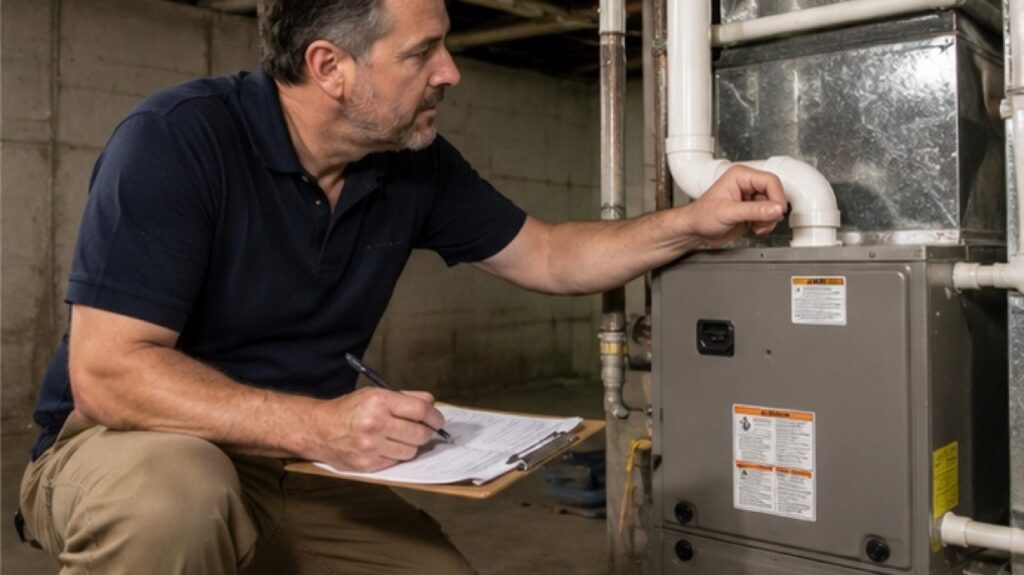
A standard home inspection looks at your water heater as a visual, point-in-time check: the inspector reports visible deficiencies like leaks, corrosion, an improper temperature and pressure relief (TPR) valve setup, or unsafe gas venting, but does not determine how many years of life the unit has left. Most tank water heaters in North Texas last about 8 to 12 years, so age, condition, and a few key safety details tell you most of what you need to know.
How long water heaters last and how to read the age
A conventional storage-tank water heater typically lasts somewhere in the 8 to 12 year range. Hard water, which is common across Dallas-Fort Worth, can shorten that by leaving sediment in the bottom of the tank, where it bakes against the burner or element and accelerates wear. Tankless units often last longer when they are maintained, but they are not immune to the same mineral buildup.
You can usually estimate the age yourself. Most manufacturers encode the build date in the serial number printed on the data plate, often using the first few digits to mark the month and year (for example, a serial beginning with a two-digit week or month followed by the year). The format varies by brand, so a quick search of the manufacturer plus "serial number age" usually decodes it. Keep in mind that under TREC's Standards of Practice, a Texas inspector is not required to determine the age or remaining life of any component. The age helps you set expectations, but it is the visible condition that drives the report.
The TPR valve and discharge pipe
The temperature and pressure relief valve is the single most important safety device on a tank water heater. If pressure or temperature inside the tank climbs too high, the TPR valve opens to release it, preventing a dangerous tank rupture. Inspectors pay close attention to the discharge pipe attached to that valve, and a few common defects show up again and again in DFW homes:
- A discharge pipe that is too short, ending well above the floor instead of terminating near it, which can spray scalding water at face height if the valve opens.
- A pipe that reduces in diameter, has threads on the end, or is capped, all of which can trap pressure or hide a leak.
- A pipe that travels uphill or routes somewhere water cannot safely drain.
- Improper materials for the application, such as certain plastics not rated for the hot discharge.
These are visible deficiencies an inspector will note. Plumbing and gas systems fall under TREC rule 535.231, and the inspector reports what is accessible and visible without taking the system apart.
Drip pans, expansion, and where the water goes
Water heaters in attics or interior closets, which are common in newer North Texas construction, usually need a drain pan plumbed to the outside so a slow leak does not soak the ceiling below. Inspectors look for a missing pan, a pan with no drain line, or a drain line that goes nowhere useful. On homes with a closed plumbing system, a thermal expansion tank may be present to absorb the pressure increase that happens as water heats and expands. When one is missing or waterlogged, you may see it reflected in pressure-related findings.
Corrosion, leaks, and sediment
Rust streaks at the fittings, a crusty buildup of mineral deposits, or active moisture around the base of the tank are all reportable conditions. A leak at the top connections is often a repairable fitting issue, while moisture at the bottom of the tank can mean the inner liner has finally given out, which usually means replacement. The inspector reports what is visible on inspection day. They cannot see inside the tank or predict exactly when a slow seep will turn into a flood, which is part of why age and visible corrosion matter so much. If you want to understand how these notes will appear in your paperwork, our guide on how to read your inspection report walks through the language inspectors use.
Gas venting and combustion air
Gas-fired water heaters need to breathe and to vent their exhaust safely. Inspectors check that the flue or vent connector rises properly, is the correct size, and is not separated, rusted through, or sloping the wrong way, since a bad vent can spill combustion gases back into the home. They also look at whether the unit has adequate combustion air and, in some installations, whether it is properly elevated or sealed. Backdrafting, scorch marks, and corroded vent pipes are the kinds of red flags that get flagged for a licensed professional. Like the rest of the inspection, this is a visual review under the TREC Standards of Practice, not a code-compliance inspection or a full combustion analysis.
Tankless basics
Tankless (on-demand) units heat water as it flows rather than storing it, so there is no big tank to corrode and no standby tank to rupture. They still get inspected for proper venting, gas and water connections, condensate handling on condensing models, and visible leaks or corrosion. In hard-water areas they benefit from periodic descaling, and the inspector will note visible signs of neglect but does not service the unit.
What to do with the findings
Water heater notes are some of the more common items on a North Texas report, alongside plumbing, electrical, and HVAC issues. For the bigger picture of what a thorough inspection includes, see what a home inspection covers in DFW. The report will tell you what is visible today so you can plan repairs and replacements with your eyes open.