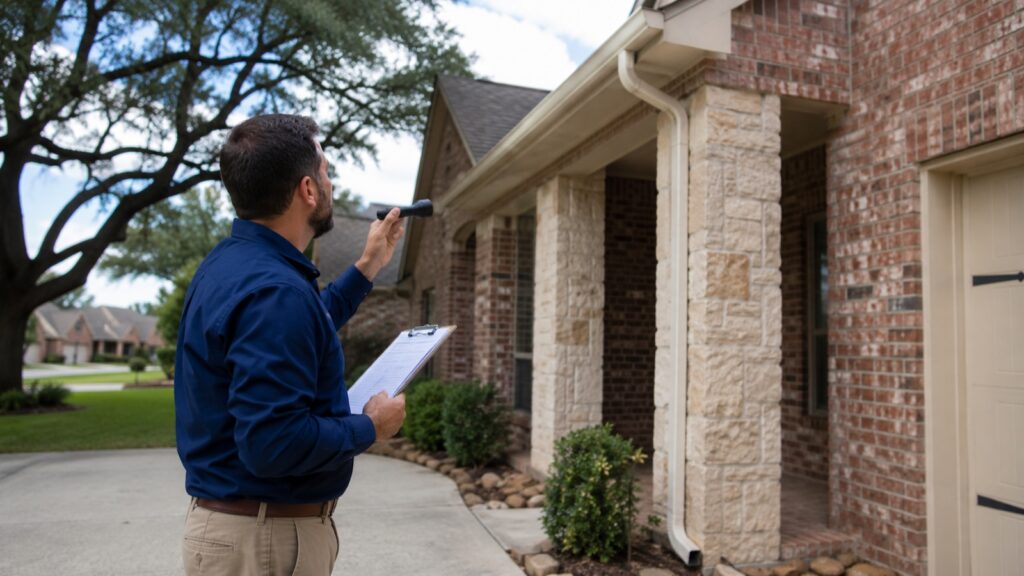
What a Texas Home Inspection Legally Must Cover (TREC Standards)
Texas inspectors follow the TREC Standards of Practice. Here is what those rules require, what they exclude, and why a great inspector goes further.
Read more →Everything Dallas-Fort Worth buyers and homeowners need to understand about home inspections: what a standard inspection covers, what it does not, how long it takes, how accurate it is, and how to read your report. Start here to learn the fundamentals before you buy, sell, or maintain a home in North Texas.
27 guides

Texas inspectors follow the TREC Standards of Practice. Here is what those rules require, what they exclude, and why a great inspector goes further.
Read more →A standard inspection notes visible moisture and mold-like growth but is not the same as laboratory mold testing, which is a separate add-on.
Read more →Inspections are thorough but visual and point-in-time, so they are a reliable snapshot rather than a guarantee or warranty.
Read more →When a roof is safe and accessible inspectors walk it, and otherwise use a ladder, drone, or binoculars depending on conditions.
Read more →From general buyer and new construction to pre-drywall, warranty, and pre-listing inspections, plus add-ons like WDI, sewer scope, and pool, here is how the…
Read more →A DIY walkthrough is great for screening homes as you shop, but it is not a replacement for a licensed inspection before you buy.
Read more →Built-in appliances get a basic operational check during an inspection, but that is a function test, not an appliance warranty.
Read more →A visual, non-invasive inspection has real limits, from hidden and underground problems to intermittent issues, which is why add-ons like a sewer scope and…
Read more →A home inspection has no pass or fail; it is an objective condition report and you decide what to do next.
Read more →Attending your inspection, especially the final walkthrough of findings, helps you understand the home and ask questions in person.
Read more →